Tuesday, November 8, 2016

Google Chrome Tutorial

HIER IST DAS VIDEO

https://www.youtube.com/watch?v=kPF1uhSBiXQ

Selection of elements for animation seem more flexible; let's compare notes, and Google continuously upgrades their programs.

Thursday, August 18, 2016

International Keyboard Access

FIND THE EXPLANATION TUTORIAL HERE

Also:  The following shortcuts work with any Google Doc and WORD.
While holding down the left "Alt" key:
 for an ä  type 0228      or      132
 for an ö type 0246      or      148
 for an ü type 0252      or      129
 or an ß  type 0223      or      225
 for an Ä type  0196
 for an Ö type 0214
 for an Ü type 0220


EURO? 
Anführungszeichen? 

Friday, March 25, 2016

Creatives Need Time Alone

http://crtv.mk/u81J 

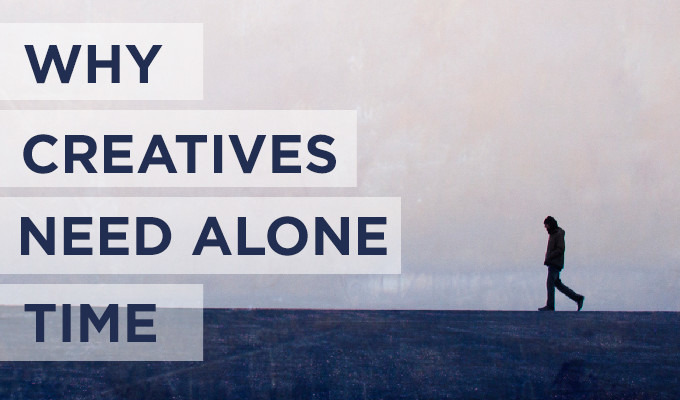
Why Creatives Need Alone Time to Thrive

By Creative Market on Mar 24, 2016 in         Takk, Anne Mette
Why Creatives Need Alone Time to Thrive
As a creative professional, there's a good chance that you spend a lot of time alone. Whether you freelance at home or work in an office full of other people, creative work requires you to delve down deep in the corners of your mind and mine it for new ideas, which can feel like a totally isolating process (especially if you're not an introvert).
However, despite the fact that your alone time might not feel particularly enjoyable (recent studies have shown that humans hate having to be alone with their thoughts), it may just be one of the keys to unlocking some of your best ideas.

The Benefits of Being Alone

Spending time alone has some particularly noticeable benefits - especially in terms of creativity and productivity: two key assets of any creative professional.

Better Focus on One Single Subject

Despite the fact you probably have a million things to get done at once, studies have shown that human brains are just not good at multitasking. By spending time alone, however, you can zero in on one project at once - meaning you can get it done more efficiently, and at a higher quality.

More Positive Emotions

Research scientist Reed Larson spent time studying the effect of being alone on the moods of teenagers and adolescents. He found that while, in general, people didn't necessarily enjoy spending time completely alone at the time, they ended up in a better mood down the line.

Freedom from Demands of Others

When we spend time with other people, psychologists explain that we are subject to their short-term demands. While these demands might be generally pretty low key, they can distract you from whatever work you're focused on. Alone time allows people to refocus on their own priorities, without having to weigh them against the requests of others.

More Creativity

Collaboration can be a fun and stimulating process. But studies have shown that trying to come up with creative ideas with other people actually gets in the way of the idea generation process. There are many reasons that group brainstorming isn't as effective as individual brainstorming: group-think, distraction, and fear of judgment (among others). So, spend time trying to come up with creative ideas alone, and you'll probably come up with more (and better) ones.

Improved Memory

Spending time alone has been shown to boost your memory. So, during your solitary work time, you may just find that you better remember facts you've learned, ideas you've come up with, and helpful associations that you've made.

How to Spend Time Alone

We live in a constantly connected world, which can make it difficult to carve out time to be alone with your creative work. If you want to ensure you get some quality solitude time in, check out the following tips:

1. Set a weekly date.

You set weekly dates with friends or partners - now try setting one with yourself. Designate a chunk of time each week that you will spend alone working on creative projects, then stick to it no matter what.

2. Create a designated workspace.

Find a workspace for yourself where you can close the door. Being able to physically separate yourself from other people while you work is a great way to unlock your creative ideas.

3. Request time to work from home.

If you work at an office, discuss the possibility of working from home with your boss. Even if you are only able to work from home once every week or two, you may see a distinct boost in your creative output.
While solitude often feels like loneliness, it's important to recognize alone time as an important step in the creative process. Creative Market creatives - do you enjoy the time you spend alone? Have you experienced any productivity or creativity benefits from solitude?

Sunday, January 31, 2016

New Prezi: SmallTowns Produce More Superstar Athletes

<iframe src="https://prezi.com/embed/s1ya568tbgad/?bgcolor=ffffff&amp;lock_to_path=0&amp;autoplay=0&amp;autohide_ctrls=0&amp;landing_data=bHVZZmNaNDBIWnNjdEVENDRhZDFNZGNIUE43MHdLNWpsdFJLb2ZHanI5Z1F4NnhadjlWY1FGYWc5UG13NlFSWDRnPT0&amp;landing_sign=s0coNFjU_6Ubj5iF0C06YHmCKNoVCRb59fSTn1L0r3A" allowfullscreen="" mozallowfullscreen="" webkitallowfullscreen="" id="iframe_container" frameborder="0" height="400" width="550"></iframe>


Tuesday, January 5, 2016

Fast Food Restaurants with Online Nutritional Information

HERE IS THE LINK

Some locations are not available. Others are international.
(Do you dare to select an international location?)

Where is Wendy's?  What other restaurants are missing?

Monday, January 4, 2016

What Do People Around The World Eat?

Weekly Food Budgets Around The World

HERE ARE THE PHOTOS


Sunday, January 13, 2008


What is eaten in one week...

This is an interesting photo comparison of what different families eat around the world in one week.
(Other recommended reading:  
Hungry Planet: What the World Eats, and
 Material World: A Global Family Portrait).

Poland: The Sobczynscy family of Konstancin-Jeziorna
Food and some beverage expenditures for one week: 582.48 Zlotys or $151.27 


Egypt: The Ahmed family of Cairo
Food and some beverage expenditures for one week: 387.85 Egyptian Pounds or $68.53


Ecuador: The Ayme family of Tingo
Food and some beverage expenditures for one week: $31.55


Bhutan: The Namgay family of Shingkhey Village
Food and some beverage expenditures for one week: 224.93 ngultrum or $5.03


Italy: The Manzo family of Sicily
Food and some beverage expenditures for one week: 214.36 Euros or $230.11


United States: The Revis family of North Carolina 
Food and some beverage expenditures for one week $341.98 


Chad: The Aboubakar family of Breidjing Camp
Food expenditure for one week: 685 CFA Francs or $1.23


Germany: The Melander family of Bargteheide
Food and beverage expenditures for one week: 375.39 Euros or $400.


Saturday, December 19, 2015

Localizing your searches -- world-wide

Don't limit yourself to reading the perspective of your neighbors.  When news involves people around the world, find out what they are writing.  Skip references ending in .edu or .com, and instead head directly to resources from the country of your inquiry.

For instance, rearching local resources in Germany, you'll use "Site.DE"  "De" stands for Deutschland.  (Including "site" as well as "DE" means that the content in your search will all be from your selected source extension -- here, from Germany.)  Can you guess the country "IR" stands for?  If you guessed Iran, you're right.

Here's a source for other country codes.

HERE's A SOURCE FOR OTHER COUNTRY CODES:

http://www.web-l.com/country-codes/

That's a great start.  But if you do a search using the local extension, but your search results uses the USA name or term, then your results will probably still be more biased than they are enlightening.  Try looking up the name the locals use for the same event.  For this task, Wikipedia is fine.

READ MORE HERE

Keep in mind that it's already a significant filter, if you are only able to read publications in English. That makes eliminating or reducing other filters even more critical yet, that is, if you truly are interested in what people in other countries are thinking and writing about. And in the age of the Internet, it only makes sense to make use of filtering tools such as these, wouldn't you agree?

Friday, December 11, 2015

Graphing on EXCEL

HERE IS THE LINK: EMBED CODE IS BELOW:

<iframe width="420" height="315" src="https://www.youtube.com/embed/ojFGMMBuoZk" frameborder="0" allowfullscreen></iframe>


Sunday, November 22, 2015

Khan Academy's Java Script Intro to Coding Class

 JAVA SCRIPT and the BASIC LESSON
 Business Insider

Online Coding Class

Now I Have A Huge Appreciation For What Programmers Do All Day

Friday, September 18, 2015

The right — and surprisingly wrong — ways to get kids to sit still in class

   
A post I published in July titled “Why so many kids can’t sit still in school today” seems to have struck a nerve with readers, who continue to read it in big numbers.  The piece was by Angela Hanscom, a pediatric occupational therapist, who said that kids are being forced to sit for too long while they are in school and are being deprived of enough time for real physical activity. This, she said, is affecting their ability to learn and in some cases leading to improper ADHD diagnoses.
Here is a follow-up post by Hanscom in which she talks about how to get kids moving in class and some of the mistakes teachers are making. Some of her suggestions may be controversial. For example, she takes issue with a method that some teachers say they are using with success — having students sit on bouncy balls. Hanscom is the founder of TimberNook, a nature-based development program designed to foster creativity and independent play outdoors in New England.

By  Angela Hanscom
My last post, “Why so many kids can’t sit still in school today,” has and continues to generate tremendous feedback from around the world. Many people wrote that the connection between moving and learning that I wrote about just makes sense. However, with this new enlightenment on whymovement and play outdoors is critical to learning and attention in the classroom, came the million-dollar question: “Now what?”
My virtual mailbox instantly got bombarded with email requests–demanding ideas on how to get kids moving both in and outside the classroom. I also noticed people were getting creative. Ideas were being tossed around. Some people suggested, “How about sitting on bouncy balls?” Others asked, “What if children stand to learn?” or “What if we put bike pedals on the classroom seats, so they can exercise while learning?” And finally, “What about taking short movement breaks?”
My initial reaction to these brainstorming sessions was, Finally! People are inspired and are starting to think outside the box. However, as I recalled whyI wrote the article in the first place, I realized these strategies were still partly missing the point. They may be creative and thoughtful, but they won’t fix the underlying problem.
In order to create actual changes to the sensory system that results in improved attention over time,  children NEED to experience what we call “rapid vestibular (balance) input” on a daily basis. In other words, they need to go upside down, spin in circles, and roll down hills. They need authentic play experiences that get them moving in all different directions in order to stimulate the little hair cells found in the vestibular complex (located in the inner ear). If children do this on a regular basis and for a significant amount of time, then (and only then) will they experience the necessary changes needed to effectively develop the balance system–leading to better attention and learning in the classroom.
In other words, adjusting children’s seating and taking quick one-minute movement breaks will offer some support — but we will continue to see significant sensory and behavioral problems, as well as a decline in children’s overall health (i.e., rise in obesity, decrease strength, and poor body awareness) if we don’t start allowing for adequate time in which children can get up and out of their seats to move.
Recently, I was invited to an educational meeting regarding a first-grade boy whom I see as a private occupational therapy client. The principal, parents, his former kindergarten teacher, new first grade teacher, school psychologist, and private therapist were all there. This little boy struggles with attention in the classroom and making social connections with peers.
This same boy attended one of our TimberNook camps (developmental nature programming) this past summer. He was totally immersed into nature for a week with peers—playing in the woods, the river, and in giant mud puddles. He had plenty of practice to move his body in all different directions and to explore nature unhindered by adult fears. In the beginning of the week, he consistently pursued total control over his play experiences with peers. He was also very anxious about trying new things, had trouble playing independently, and had multiple sensory issues.
Amazingly, by the end of the week, he started to let go of this need to control all social situations. He also started tolerating and asking to go barefoot, made new friends, and became less anxious with new experiences. The changes were really quite remarkable. All he needed was time and practice to play with peers in the woods – in order to foster his emotional, physical, and social development.
Most of these teachers had already read my article about why kids fidget and agree with this philosophy. It didn’t matter. When they heard my response, they started laughing – all of them. I think my face went bright red. “That is never going to happen,” said one of the teachers. “Yes,” agreed another teacher. “Unfortunately, our hands our tied.” The principal just sat there and said nothing at all. That’s it? I thought to myself. They know that children NEED this, but they aren’t going to do anything about it?
After the meeting, the teachers came up to me and apologized for laughing. They said: “We agree with you. We would love to allow for longer recess sessions, but there is nothing we can do. We simply don’t have the time.”
I started talking to other teachers about this same issue. Most teachers are just as frustrated, if not more than the parents. Secondary to testing requirements, teachers are feeling the pressure to have to fit in loads of curriculum everyday. They have little time to do project-based learning, let alone providing adequate time for children to move. Unfortunately, many teachers have to settle for fitting in a few minutes of movement here and there.
However, when do we draw the line? When do we say, “Enough is enough?” Shortened recess times, cutting gym classes, and other specials (i.e., music and art) means we are no longer respecting the needs of the whole child. Our system of testing is failing our children. It fails to test their social skills, their ability to think for themselves, and their physical skills (i.e., strength, endurance, coordination). Aren’t these just as important as their ability to read, write, and do arithmetic? We need to be careful not to put total emphasis on just a few subjects, while neglecting children’s other needs.
Lindsey Lieneck, MS, OTR, RYT, founder of Yogapeutics, a fellow pediatric occupational therapist and advocate for movement, recently commented, “Come on people! We are a brilliant society! We can create technology that is out of this world. Yet, we can’t figure out how to provide enough time for children to move?”
I agree with Lindsey. We CAN create more time for children to move during the school day. Saying, “our hands are tied” is just about as bad as a child saying, “I can’t.” Let’s not give up the fight before we even start. We had ample time to move and play during the school day when I was a child in the early 1980s, and we can figure out how to do it again.
What are YOU going to do about it?
Valerie Strauss covers education and runs The Answer Sheet blog.

How Finland Keeps Kids Focused Through Free Play

An American teacher in Helsinki questioned the national practice of giving 15 minute breaks each hour—until he saw the difference it made in his classroom.

 
Like a zombie, Sami—one of my fifth graders—lumbered over to me and hissed, “I think I’m going to explode! I’m not used to this schedule.” And I believed him. An angry red rash was starting to form on his forehead.

Yikes, I thought. What a way to begin my first year of teaching in Finland. It was only the third day of school and I was already pushing a student to the breaking point. When I took him aside, I quickly discovered why he was so upset.

Throughout this first week of school, I had gotten creative with my fifth grade timetable. Normally, students and teachers in Finland take a 15-minute break after every 45 minutes of instruction. During a typical break, students head outside to play and socialize with friends while teachers disappear to the lounge to chat over coffee.
I didn’t see the point of these frequent pit stops. As a teacher in the United States, I’d spent several consecutive hours with my students in the classroom. And I was trying to replicate this model in Finland. The Finnish way seemed soft and I was convinced that kids learned better with longer stretches of instructional time. So I decided to hold my students back from their regularly scheduled break and teach two 45-minute lessons in a row, followed by a double break of 30 minutes. Now I knew why the red dots had appeared on Sami’s forehead.
Come to think of it, I wasn’t sure if the American approach had ever worked very well. My students in the States had always seemed to drag their feet after about 45 minutes in the classroom. But they’d never thought of revolting like this shrimpy Finnish fifth grader, who was digging in his heels on the third day of school. At that moment, I decided to embrace the Finnish model of taking breaks.
Once I incorporated these short recesses into our timetable, I no longer saw feet-dragging, zombie-like kids in my classroom. Throughout the school year, my Finnish students would—without fail—enter the classroom with a bounce in their steps after a 15-minute break. And most importantly, they were more focused during lessons.
At first, I was convinced that I had made a groundbreaking discovery: frequent breaks kept students fresh throughout the day. But then I remembered that Finns have known this for years; they’ve been providing breaks to their students since the 1960s.
In my quest to understand the value of the Finnish practice, I stumbled upon the work of Anthony Pellegrini—author of Recess: Its Role in Education and Development and emeritus professor of educational psychology at the University of Minnesota—who has praised this approach for more than a decade. In East Asia—where most primary schools give their students a 10-minute break after 40 minutes or so of classroom instruction—Pellegrini observed the same phenomenon that I had witnessed at my Finnish school. After these shorter recesses, students appeared to be more attentive in the classroom.
Not satisfied with anecdotal evidence alone, Pellegrini and his colleagues ran a series of experiments at a public elementary school to explore the relationship between recess timing and attentiveness in the classroom. In every one of the experiments, students were more attentive after a break than before a break. They also found that the children were less attentive when the timing of the break was delayed—or in other words, when the lesson dragged on.
In Finland, primary school teachers seem to know this intuitively. They send kids outside—rain or shine—for their frequent recesses. And the children get to decide how they spend their break times. Usually, teachers in Finland take turns—two at a time—supervising the playground during these 15-minute stints.
Although I favor the Finnish model, I realize that unleashing fifth graders on the playground every hour would be a huge shift for most schools. According to Pellegrini, breaks don’t have to be held outdoors to be beneficial. In one of his experiments at the public elementary school, students had their recess times inside the school and the results matched those of other experiments where students took their breaks outside: After their breaks, the children were more attentive in class.
What’s most important is not where kids take breaks but how much freedom we give them from their structured work.When break times are teacher-directed, Pellegrini found, the recess loses its value. It’s free-play that gives students the opportunity to develop social competence. During these times, they not only rest and recharge—they also learn to cooperate, communicate, and compromise, all skills they need to succeed academically as well as in life.
As a teacher, I’m always trying to improve my classroom through experimentation. What I realized in Finland, with the help of a flustered fifth grader, is that once I started to see a break as a strategy to maximize learning, I stopped feeling guilty about shortening classroom instruction. Pellegrini’s findings confirm that frequent breaks boost attentiveness in class. With this in mind, we no longer need to fear that students won’t learn what they need to learn if we let them disconnect from their work for 10 or 15-minute periods, several times throughout the school day. And let’s be honest here, we teachers benefit from these breaks, too.